In today’s world, installing commercial door hardware is very important. A good door makes a business look better and keeps it safe. Knowing the different types of hardware is key for business owners.
There are many options, like strong locks and systems for easy access. These choices help businesses stay safe and accessible.
Getting door hardware installed right makes it work better for longer. It gives businesses peace of mind. For the best results, choose experts like The Flying Locksmiths. They know a lot about commercial locksmith services.
They make sure businesses are safe and follow all rules. Let’s look at the different types of commercial door hardware, what they do, and how to choose the right one.
Key Takeaways
- Commercial door hardware installation is essential for security and accessibility.
- Different types of hardware cater to various business needs and traffic levels.
- Professional installation services enhance functionality and ensure compliance.
- Regular maintenance prolongs the lifespan of door hardware.
- Choosing quality components is critical for optimal performance and reliability.
Understanding Commercial Door Hardware
Commercial door hardware is key for safety, security, and function in businesses. Knowing the types and their uses helps make smart choices. This part talks about the hardware, what it does, and what to think about when picking the right one.
Diamondback Locksmith
609 N Scottsdale Rd Ste E
Scottsdale, AZ 85257
(480) 360-5371
https://diamondbacklockandkey.com/scottsdale-locksmith-company/
Types of Commercial Door Hardware
There are many types of commercial door hardware for different needs:
- Commercial door locks: These keep doors safe and come in types like mortise and cylindrical locks. Mortise locks are strong and often used in schools and hospitals.
- Commercial door closers: They make sure doors shut right after opening. This stops slamming and keeps things secure. There are special closers for fire doors that meet certain standards.
- Panic hardware: It’s needed in buildings with many people. It lets people exit safely by opening easily.
- Push and pull plates: They’re good for places with lots of people. They help doors last longer by not wearing out too fast.
Functionality and Purpose
Knowing how each piece works helps improve safety and efficiency. Door locks keep unwanted people out. Door closers help doors move right and keep things secure. Panic hardware is very important because it’s needed in many places, like big buildings.
Key Considerations for Selection
Choosing the right hardware needs careful thought:
- Compatibility: Make sure the hardware fits with your doors and follows local rules.
- Durability: Pick hardware that’s tested by groups like UL and ANSI. Look for grades that show it’s strong and safe.
- User accessibility: Think about how easy it is for people to use the hardware, even in emergencies.
- Security needs: Think about how safe you need to be. Choose features like key systems or biometrics to stop theft and unauthorized entry.
Tools Needed for Installation
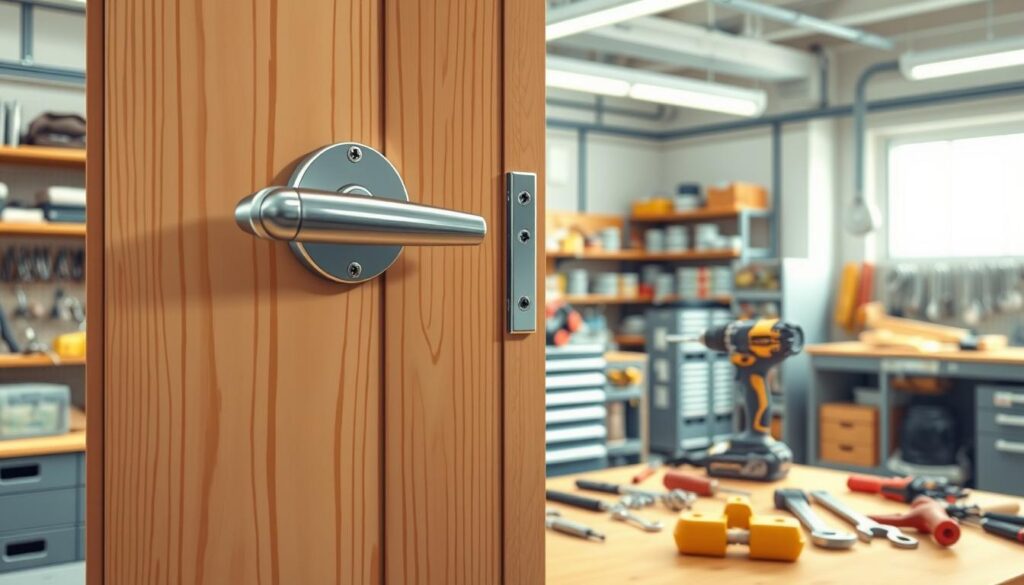
Getting ready for door hardware installation means knowing the right tools. The right tools make the job easier and safer. If you’re doing a big job, getting help from experts is a good idea. Here are the main tools you’ll need and some safety tips.
Essential Tools Overview
- Power Drill
- Level
- Tape Measure
- Pencil
- Set Square
- Phillips Head Screwdriver
- Flathead Screwdriver
- Hammer
- Chisel
- Dust Sheets
- Masking Tape
Knowing the right sizes is key for a good install. For example, a standard door is a bit smaller than the opening. You’ll need tools like a level and tape measure to get it right.
| Measurement Parameter | Standard Dimension |
|---|---|
| Width of Door | 1/2″ less than the rough opening width |
| Height of Door | 1/4″ less than the rough opening height |
| Clearance (top rail to frame) | 1/8″ |
| Initial Weathering Clearance (pairs of doors) | 1/8″ |
| Glass and Aluminum Spacing | 3/16″ |
Safety Gear Recommendations
Working on installations can be risky. That’s why safety gear is a must. Here are the basics:
- Gloves
- Safety Glasses
- Helmets (when working in elevated areas)
Wearing the right safety gear keeps you safe from sharp objects and dust. Using the right tools and safety gear makes the job safer and more efficient.
Step-by-Step Installation Process
Installing commercial door hardware needs care and detail. Knowing the steps helps ensure everything works right. This guide covers preparing the door frame, installing hardware, and making final checks.
Preparing the Door Frame
First, get the door frame ready. Make sure the opening is the right size. Storefront doors need to be 1/2″ less wide and 1/4″ less tall than the opening.
Check the frame for damage. Doors over 8 feet tall might need extra support. Keep hardware pieces 1/8″ apart for best function.
Installing Hardware Components
Next, put in the hinges and locks. Make sure they’re straight. Commercial doors usually have a 2-3/4″ backset.
Secure the door frame to the wall with strong screws. Use longer screws and reinforced plates for exterior doors to stop break-ins.
Final Adjustments and Testing
After installing, make final checks and adjustments. Check the weathering clearance, which should be 1/8″. This keeps the door secure.
Test locks several times to ensure they work right. For electronic locks, get professional help for setup and programming.
Common Challenges in Installation
Installing commercial door hardware can be tricky. It can affect how well the door works and how it looks. Knowing these challenges is key to a smooth installation, whether you do it yourself or get help from experts.
Misalignment Issues
Misalignment is a big problem in door installation. About 70% of commercial door issues come from problems like sticking or sagging. Building foundation settling or shifting is often the cause, making up 60% of cases.
Using the right installation methods and checking doors often can help. This makes doors work better and last longer.
Hardware Compatibility Concerns
Matching components is another big part of the job. For example, 80% of door hardware problems can be avoided with regular cleaning and oiling. It’s also important to use the right hardware grade.
Commercial doors need to meet higher standards than home doors. This is true for places like hospitals or stores where safety and function are key. Issues with access control systems are common, with 70% of problems caused by electrical problems.
Maintenance Tips for Longevity
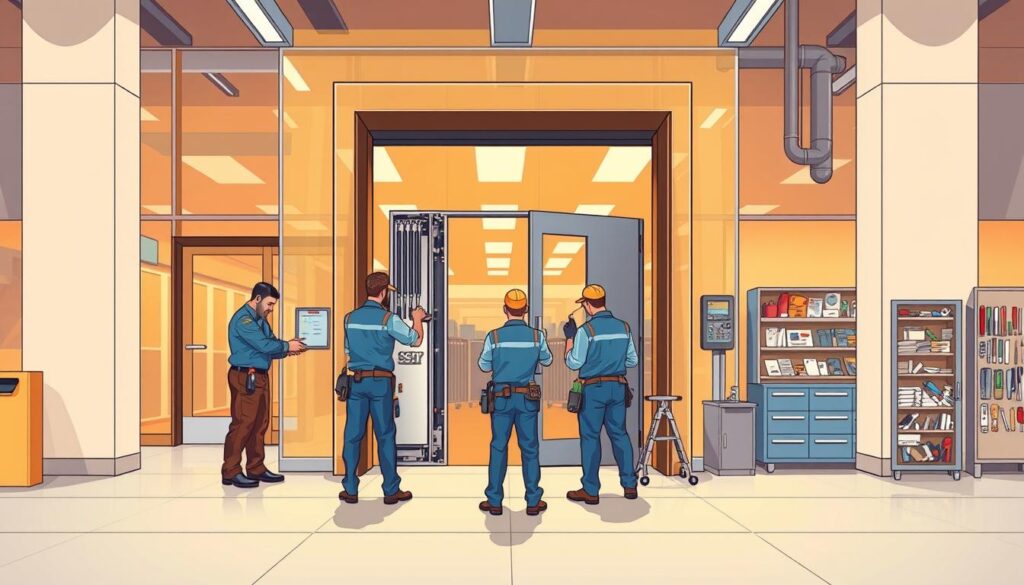
Keeping commercial door hardware in good shape is key for its performance and security. Companies can save a lot on repairs and make their doors last longer by being proactive. Getting help from door hardware experts can make these efforts even better.
Regular Inspections
Checking commercial doors regularly can spot problems early. This can save up to 70% on repair costs. Experts say to check doors at least twice a year. This helps make sure everything works right and spots wear and tear early.
Cleaning Guidelines
Cleaning commercial doors keeps them looking good and lasting longer. Use oil-based paint to protect them from the weather. Make sure the area around doors is clear to avoid damage. Door bumpers help prevent damage and keep doors in good shape.
Lubrication Techniques
Using the right lubrication keeps doors working smoothly. WD-40 on hinges can make them last up to 50% longer. Regular checks on door closers and hinges help doors last longer and meet fire codes. Fixing small problems early can stop up to 80% of big repairs later.
| Maintenance Task | Benefit | Frequency |
|---|---|---|
| Regular Inspections | Identify issues early | Twice a year |
| Cleaning | Enhance longevity | Monthly |
| Lubrication | Reduce friction | Annually |
| Weatherstripping Check | Improve insulation | Every 6 months |
These tips are very important for businesses that use commercial doors. Working with door hardware specialists can make maintenance better and improve security. By following these steps, companies can keep their door hardware in top shape for a long time.
Hiring Professional Installation Services
Deciding if you should install commercial door hardware yourself or hire a pro is key. Knowing when to get help ensures your business doors are secure and work well. If you need big upgrades, face special building challenges, or need top security, hiring a locksmith is a smart move.
When to Consider Professionals
It’s wise to hire pros for door hardware installation in certain cases:
- When upgrading to high-security locking systems.
- If the business’s doors need special materials like hollow metal or fire-rated doors.
- In situations where precise measurements are critical for seamless integration with existing frameworks.
- During urgent scenarios, such as emergency door repairs where prompt action is necessary.
Benefits of Choosing Experts
Choosing experts for door hardware installation brings many benefits:
- Expert Knowledge: Pros have the skills and know-how for different door types, ensuring they meet standards.
- Access to Industry-Standard Tools: Good installation needs special tools that most businesses don’t have.
- Enhanced Efficiency: Pros can do the job fast, with little disruption to your business.
- Improved Security: Rightly installed hardware looks good and makes your place safer.
Choosing professional door hardware installation means your business is secure and has durable, functional doors. Companies like Diamondback Locksmith offer top-notch commercial door services for all kinds of needs.
DIY vs Professional Installation
Many people debate whether to do it themselves or hire a pro for door hardware installation. Knowing the good and bad of each choice is key. DIY can save money and feel rewarding, but it might not be the best choice for everyone.
Pros and Cons of DIY
Doing it yourself has some perks:
- Cost Savings: You skip the labor cost, saving money.
- Personal Achievement: You get to feel proud of finishing a project.
But, DIY has its downsides too:
- Lack of Expertise: Without the right skills, you might mess it up.
- No Warranty: DIY projects often don’t come with a warranty, so you pay for fixes yourself.
Cost Comparisons
Looking at the money side is important. Replacing an entry door can cost $800 to $1500. Professional installation might seem pricier at first, but it’s worth it in the long run.
| Aspect | DIY Installation | Professional Installation |
|---|---|---|
| Initial Cost | Lower | Higher |
| Warranty Coverage | None | Included |
| Time Required | Varies | 5-6 hours |
| Quality Assurance | Variable | Consistent |
Professional installers make things easier and more reliable. They know the rules and do the job right. Even though it costs more upfront, it can save you money later. Plus, you get warranties and guarantees for peace of mind.
The Future of Commercial Door Hardware
The world of commercial door hardware is changing fast. It’s all about making things safer and more efficient. New tech like RFID and camera validation is becoming popular. It makes entry systems touchless, which is a big deal.
Businesses need to keep up with these changes. They should get advice from trusted commercial door hardware suppliers.
Innovations and Trends
New tech like deep learning and AI is coming. It will help door hardware learn and improve. This means better security and business insights.
Also, doors are getting more energy-efficient. Insulated glass and smart sensors save energy. This is good for the planet and helps businesses save money.
Smart Door Hardware Solutions
Smart door hardware solutions are on the rise. They’re expected to grow by 23% each year. This includes biometric tech like fingerprints and retina scans.
Using these smart solutions helps businesses stay ahead. They make security better, user experience smoother, and operations more efficient.
